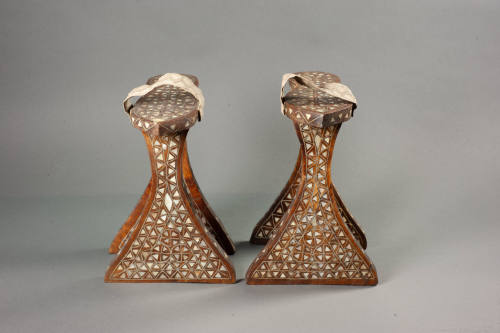
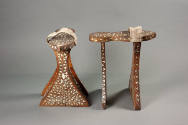
Stilted bath clogs (qabaqib)
These wooden bath clogs (sing. qabqāb/qubqāb; pl. qabāqīb) inlaid with pewter and mother-of-pearl, were handmade in a Syrian workshop and follow a longstanding tradition of stilted clogs worn in the public bathhouse during the Ottoman period. Although they raised a woman's feet off the wet floor of the bathhouse (Arabic ḥammām), she would have required the support of a personal attendant to walk in them owing to their towering height. Together with her embroidered towels, metal bath bowls, loofah, pumice stone, comb, soaps, and other bathing acoutrements, the clogs elevated her status within the hammam. The Arabic word qabqāb derives from the clacking noise they made on marble floors.
According to Widad Kawar, these bath clogs were made in Syria, in Damascus or Aleppo, they were likely used in Palestine and were the type of high status accessory included in a woman's bridal trousseau.