

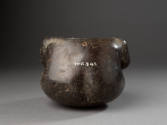
Human Effigy Jar
Gallery Location
Not on View
Maker
Casas Grandes Culture
Medium
Ceramic
Geography
Casas Grandes Valley, Mexico
Date
AD 1200 - 1400
Object number
HMC343
Collection
Department
Art & Culture: Archaeology of the Americas
Description
In the Chihuahuan desert of northern Mexico, the Casas Grandes culture flourished in the regional centre of Paquimé from 1200-1400 AD. Paquimé is the largest known ancient Puebloan town and was a massive trade centre that specialized in exotic goods like macaws, turquoise, and sea shells. It was also a major producer and exporter of ceramics, like this jar. Because of the wealth this trade brought, the people of Paquimé were able to build ball courts, large ritual mounds, complex irrigation systems, and elaborate tombs for elites. Human effigy jars were made, often depicting seating figurs with a head place above half of the vessel rim. The vessels do not appear to depict particular individuals, but may be linked to the worship of honoured ancestors as this was a common practice in ancient Mesoameria.In this example, the head has been broken off.



If you see an error or have additional information, please contact us.